How Route-Matching Works (and Why It's Different to "Nearby")
Add your route and rough dates, then get matched on overlap rather than proximity. The mechanic behind route-matching, step by step.
Most apps that connect people work the same way: show me who’s nearby, right now. That’s a reasonable default for most social apps. It’s a poor fit for travel, where “nearby” is only true for as long as you happen to be standing still, which for a travelling solo traveller is not very long at all.
Route-matching starts from a different question: not who’s near me, but who’s heading where I’m heading, when I’m heading there. Here’s what that actually looks like in practice.
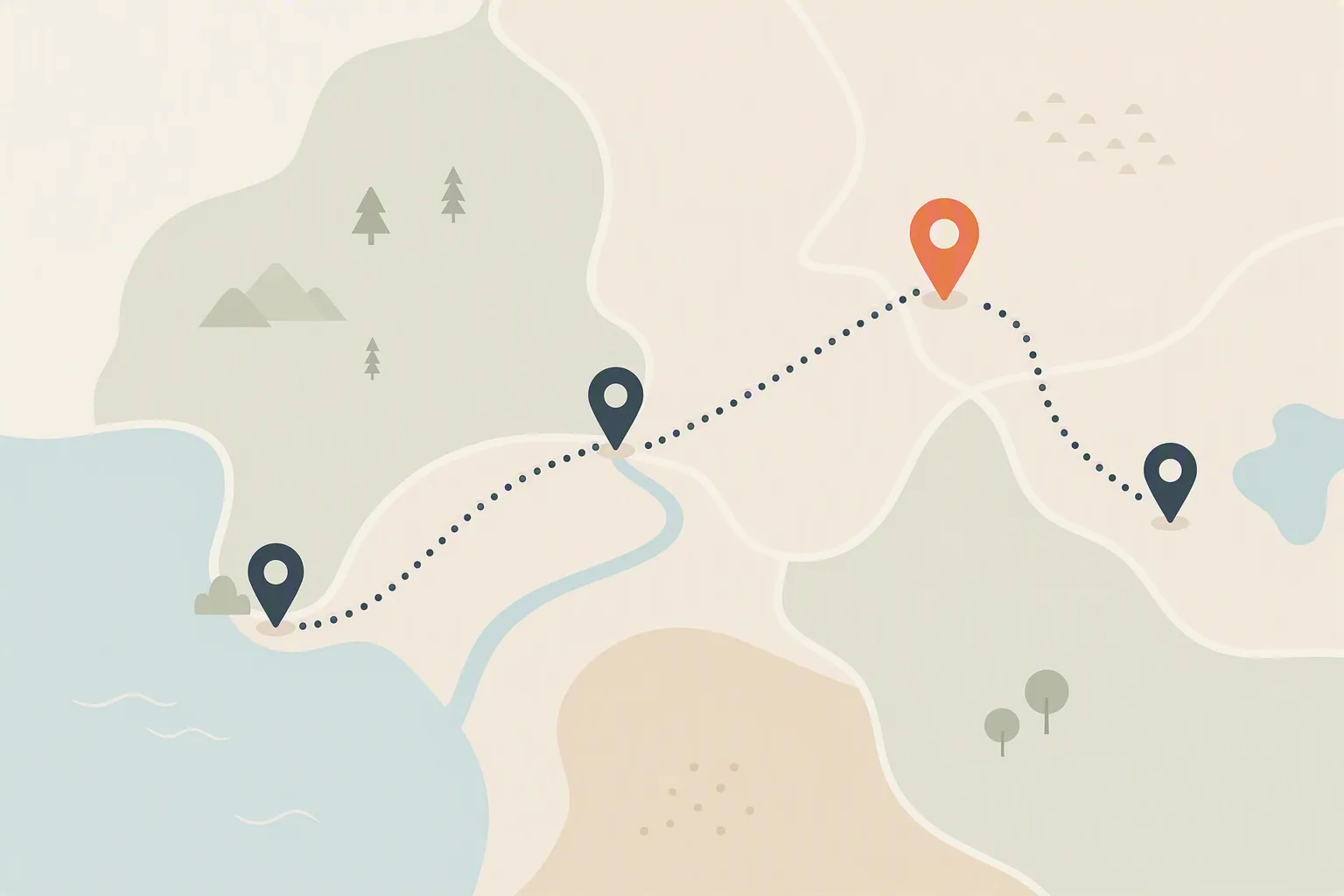
Step one: you add your route, not just your location
Instead of a single “current city” field, you add your actual travel plan. Where you’re starting, the stops along the way, and roughly when you expect to be in each one. It doesn’t need to be locked in. Plans change, and a rough date range for each stop is enough to work with.
This is the part that does most of the work. A location tells you where someone is. A route with dates tells you where they’re going to be, which is the thing you actually need to know if you want to plan around it rather than stumble into it.
Step two: the matching happens on overlap, not proximity
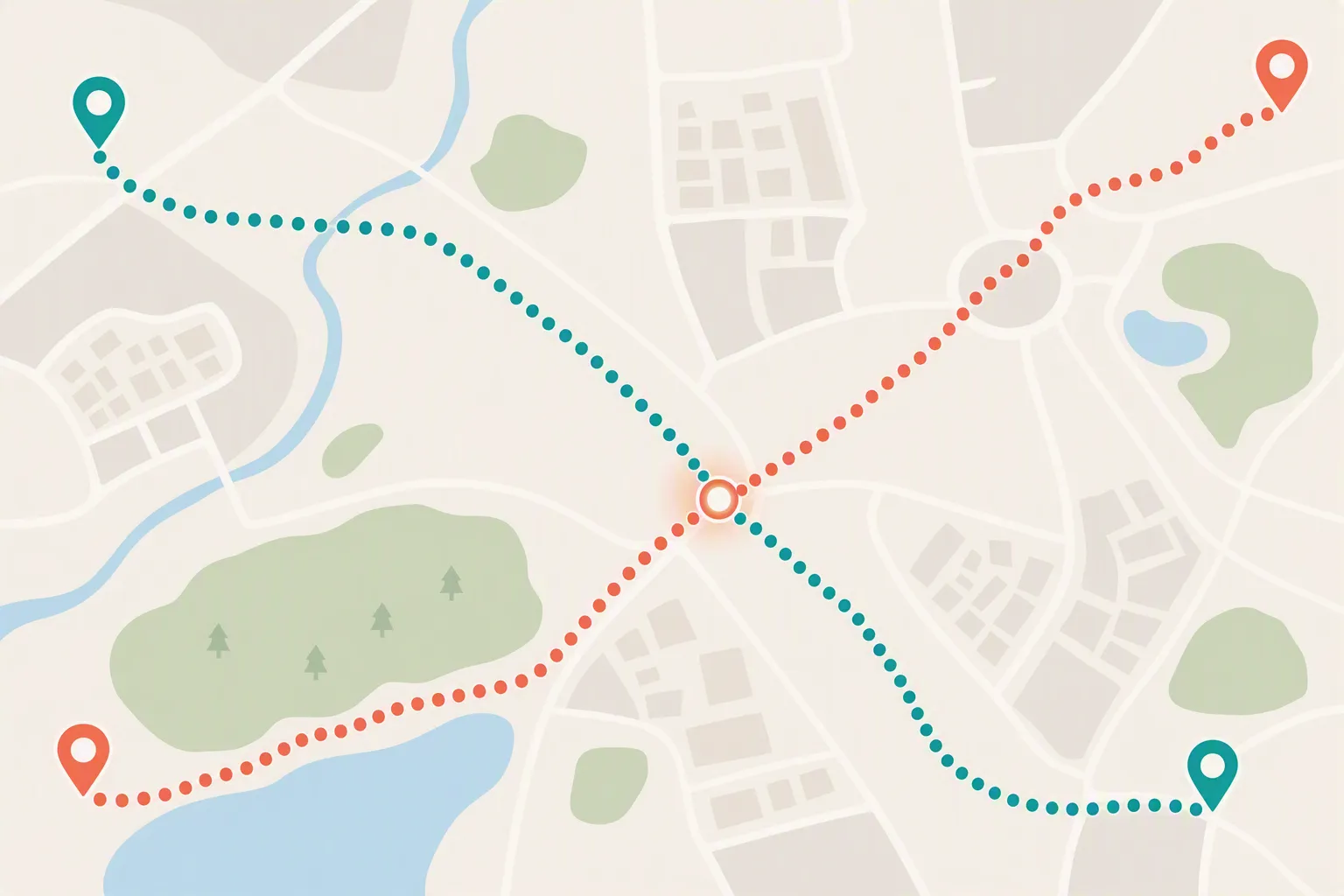
Once your route is in, the matching looks for other travellers whose stops and dates overlap with yours, not just anyone in the same city today. Two people can be a genuine match even if they’re nowhere near each other yet, as long as their routes are going to cross.
This is the opposite of how a typical swipe app works. There, you’re shown people based on where you are right now, and the match only makes sense if you both happen to still be there when someone replies. With route-matching, the useful information (will our paths actually cross) is established up front, before either of you has left home.
Step three: you see who’s actually worth reaching out to
Instead of an undifferentiated feed of everyone nearby, you see the travellers whose plans genuinely intersect with yours. Someone arriving in Seville the same Tuesday you are. Someone crossing into Prague the same weekend. The overlap is the point, not an accident you have to hope for.
Step four: you match, then you message
Once there’s mutual interest, you can actually talk, the same as any messaging-based app. The difference isn’t in how the conversation happens. It’s in what’s already true by the time it starts: you already know there’s a real reason to talk, because your routes overlap, not just your current postcode.
Why this matters more than it sounds like it should
The apps solving “who’s nearby” have been around for years, and solo travellers still report the same recurring gap: arriving somewhere new and hoping, rather than knowing, that someone worth meeting is around. That’s not a failure of any particular app. It’s what happens when the underlying question (where will you actually be, and when) never gets asked.
Route-matching asks it upfront. It’s a small shift in what information the app collects, and it changes the whole experience: from checking who’s nearby once you’ve already arrived, to knowing before you’ve left whether this trip is going to be a solo one or not.
If you want the fuller picture of every way solo travellers currently try to solve this (apps, hostels, Facebook groups, and where each one falls short), that’s covered in finding a travel companion for your next trip.
FAQ
What is route-matching in a travel app?
It’s a way of connecting travellers based on where their trip is going and when, rather than only where they currently are. You add your route and rough dates, and the app looks for other travellers whose plans overlap with yours.
How is this different to a location-based travel app?
A location-based app shows you who’s nearby right now, which only works if you’re both still in the same place by the time you connect. Route-matching looks at your whole trip, so you can find overlap with someone before either of you has even left home.
Do I need an exact itinerary for route-matching to work?
No. Rough date ranges for each stop are enough. Plans change while travelling, and the matching is built around that, not around a fixed schedule.
Can I still message someone once I’ve matched?
Yes. Matching and messaging work the same way you’d expect from any app, once you’ve matched. The difference is entirely in how the match happens, not in what you can do once you have one.
Ready to see who’s heading your way
That’s the whole mechanic: add your route and dates, see who genuinely overlaps, match, and message. The waitlist’s open if you’ve got a trip coming up in Europe.
Heading somewhere soon?
Join the waitlist and meet people on your route before you arrive.
Join the waitlist