How to Find a Travel Companion for Your Next Trip
Apps, hostel group chats, Facebook groups, walking tours, route matching — an honest look at every way solo travellers actually find people, and where each one falls short.
Somewhere between “I want to travel solo” and “I don’t want to do this entirely alone” sits a genuinely common problem: how do you actually find someone to travel with, or meet along the way, without it being a whole production?
There are more ways to solve this than most people realise, and most guides on the subject only cover one or two of them, usually whichever one the guide is trying to sell you. This one covers all of them honestly, including the real limitations of each, so you can pick the one (or three) that actually fit your trip.

Start by deciding what you’re actually looking for
“Travel companion” covers a few different things, and it’s worth being clear with yourself about which one you want before you pick a method:
- Someone to travel with from the start — you plan a trip together, or join someone else’s, and you’re together for most of it.
- Someone to meet along the way — you’re travelling solo, but you’d like to cross paths with people heading the same direction and spend some time with them.
- Just not being alone on the hard days — you’re happy travelling solo overall, but you’d like some structure around the moments (arrivals, first evenings) that tend to be loneliest.
Most of what follows is more relevant to the second and third than the first, since finding someone to commit to an entire trip together, before you’ve met them, is a much bigger ask than finding overlap along the way.
Dedicated travel-companion apps
A small category of apps exists specifically to solve this problem: profile-based, built around travel rather than dating or general friendship. Tourlina is the best-known example. You build a profile, enter one destination and a date range, and it surfaces people whose trip overlaps with yours there, plus people near your current location.
The honest limitation here is granularity, not timing. Tourlina does match on dates as well as destination, but only for one destination at a time. It solves the browsing problem well, and the single-destination timing problem reasonably well. It doesn’t solve timing across a multi-stop route at all.

We’ve written a fuller, more specific roundup of the best apps for meeting solo travellers, including direct comparisons, if this is the route you want to go down.
General social apps repurposed for travel
Bumble BFF wasn’t built with travel in mind, but plenty of people use it while travelling, mostly because it’s already installed and the mechanic is familiar. It can work reasonably well if you’re staying somewhere for a while, a longer city stay or a digital nomad base, where the usual friendship-app timeline (matching, chatting, eventually meeting) has time to actually play out.
It works far less well for a fast-moving multi-city trip. Travel Mode (Bumble Premium) lets you flag you’re visiting one city for up to seven days, but there’s no way to tell the app “I’m only here for three more days” within a longer itinerary, so across a multi-city trip you’re matched much the same way you would be at home, and a lot of matches simply expire before either of you gets around to meeting.
Facebook and Reddit travel groups
This is probably the single most-used method that doesn’t get talked about much, because it’s not a product anyone’s marketing. Large regional Facebook groups (interrailing groups, backpacking-Europe groups) and travel-focused subreddits are full of people posting some version of “anyone around in Split next week?” and it genuinely works often enough that the habit persists.
The honest trade-off is volume and structure. A group with tens of thousands of members means your post is one of dozens that day, dates get buried in comment threads, and there’s no way to actually see whose plans overlap with yours beyond scrolling and hoping something lines up. It’s free and it works by luck, not by matching.
If you do go this route, be specific: a post with a city, a date, and a plan gets far more useful replies than a vague “anyone want to be friends” post.
Hostel WhatsApp groups and common rooms
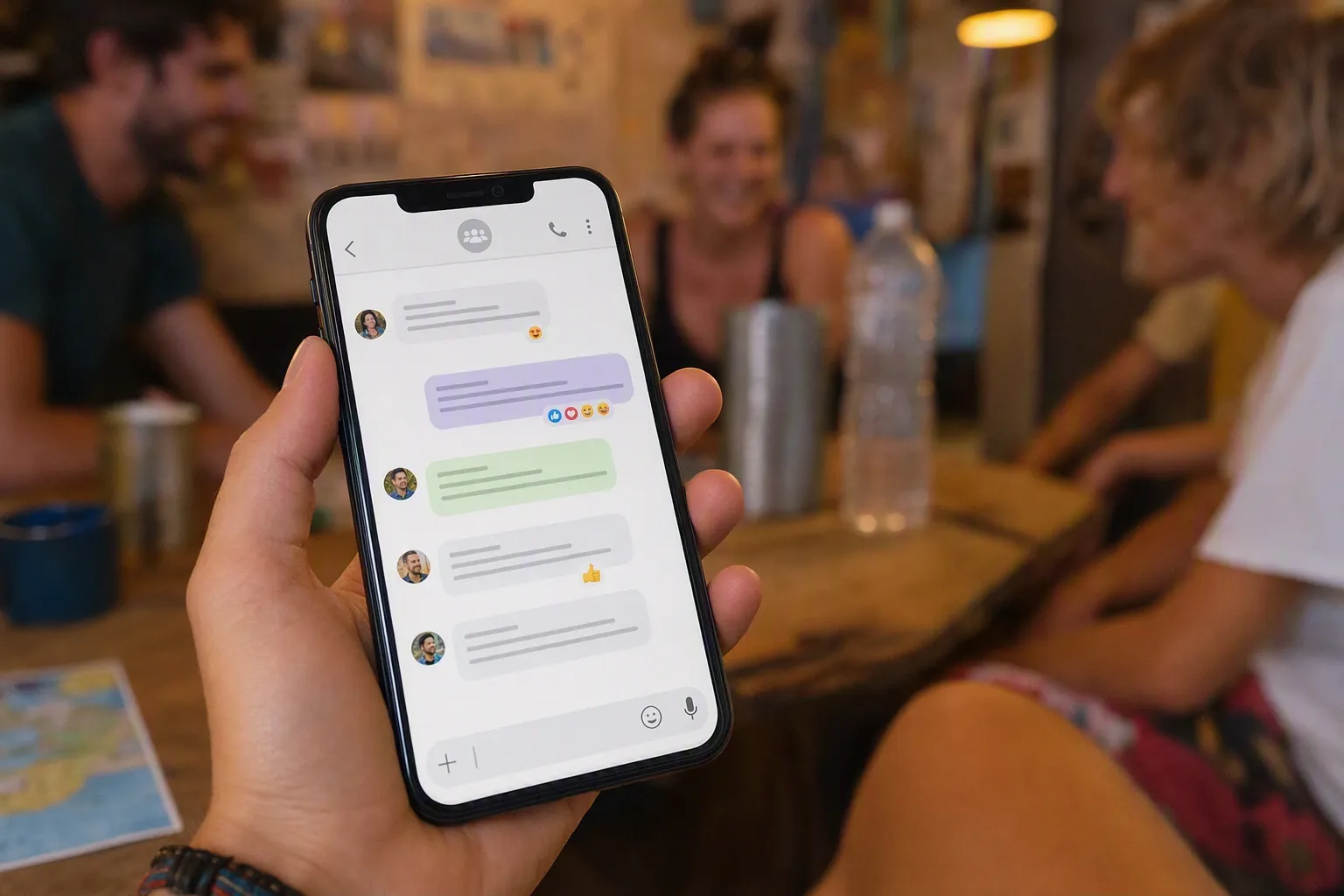
Most social hostels run a WhatsApp group for current guests, and it’s one of the most effective tools that exists for meeting people, for a simple reason: everyone in it is already physically there. No timing problem, no browsing a profile, just a group of people in the same building who are mostly in the same mood to meet someone.
The honest limitation is exactly that immediacy. It only works once you’ve arrived, so it does nothing for the period before you get there, which is often when solo travellers most want to know someone’s coming. It also resets completely every time you move city, so whatever you build rarely survives the trip.
We’ve written more on why solo interrailing feels lonelier than people expect, including where this specific gap (the bit before you arrive) tends to bite hardest.
Meetup and walking-tour based methods
Free walking tours, pub crawls, and cooking classes aimed at travellers are a reliable, low-effort way to end up in a room with other solo travellers without needing to “find” anyone specifically. You show up, you’re there for two or three hours with the same small group, and conversations happen naturally because you’re doing something together rather than making small talk from a standing start.
The limitation is availability and timing: not every city has a good one running when you need it, and it depends on being somewhere with enough tourist infrastructure to support them.
Route-and-date matching
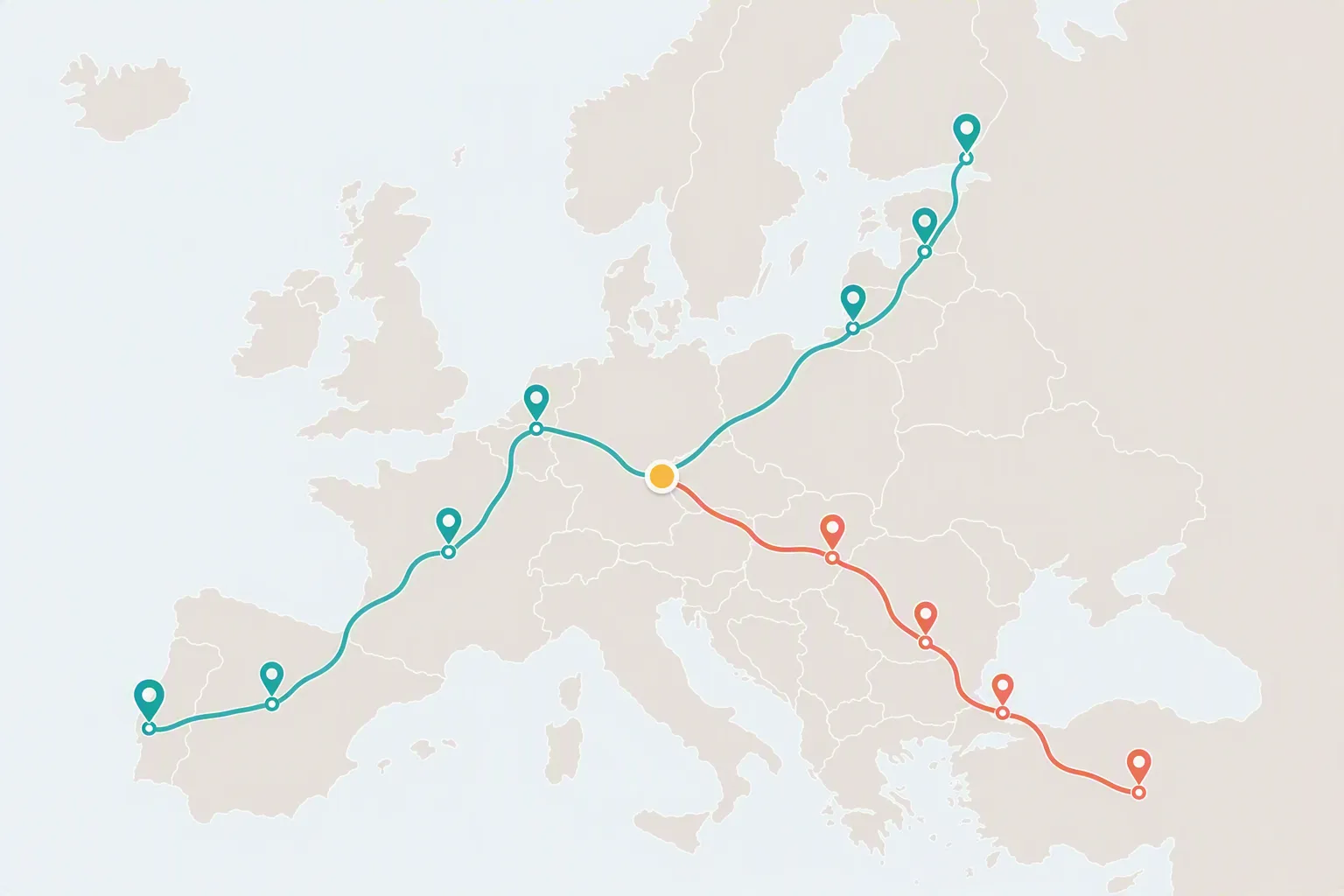
This is the newest category, and it starts from a different question to most of what’s above. Instead of who’s nearby right now, or who’s booked into the same single destination as you, it asks who’s heading where you’re heading, stop by stop, when you’re heading there.
In practice: you add your route (the cities or stops you’re planning) with rough dates, and you’re matched with other travellers whose plans genuinely overlap with yours, not just anyone in the same city today. That means you can know someone’s arriving in Lisbon the same weekend you are before either of you has left home, rather than hoping you happen to cross paths once you’re both there.
Antur is built specifically around this. It’s the newest approach on this list, which also means the honest caveat: it depends on enough other people using it on your specific route for the matching to actually surface someone. It’s strongest on popular corridors (the classic interrail routes through Western and Southern Europe) and weakest on unusual, off-the-beaten-path itineraries, at least until there’s more density.
If you want the mechanics of exactly how this works, we’ve written a plain-language walkthrough of route-matching. And if you’re planning the route itself, how to actually plan an interrail route solo covers the planning side this method depends on.
Comparing the options honestly
| Method | Best for | Real limitation |
|---|---|---|
| Dedicated travel apps (Tourlina, etc.) | Matching on one destination’s dates | One destination at a time, no multi-stop route and no leg-by-leg overlap |
| General social apps (Bumble BFF) | Longer stays in one place | Not built for fast-moving itineraries |
| Facebook / Reddit groups | Free, high-volume, route-specific asks | No structure — works by luck and how active the group is |
| Hostel WhatsApp groups | Meeting people once you’ve arrived | Does nothing before you arrive, resets every city |
| Walking tours / meetups | Low-effort, natural conversation | Depends on availability where you are |
| Route-and-date matching (Antur) | Knowing before you arrive who’s on your route | Depends on enough people using it on your specific route |
No single method covers every situation, which is why most experienced solo travellers end up using two or three of these at once: a route-matching app to know who’s coming before they arrive, a hostel WhatsApp group once they’re there, and a Facebook group as a backup for whatever the other two miss.
A simple way to decide where to start
- If you’re planning weeks ahead and want to know who’s coming before you arrive — start with a route-and-date matching app.
- If you’re already on the road and want to meet people tonight — the hostel WhatsApp group and a walking tour will do more for you than any app.
- If your route is unusual or off the main corridors — Facebook and Reddit groups are your best free option, since density matters more than structure there.
- If you’re settling somewhere for a while rather than moving fast — a general social app like Bumble BFF has time to actually work.
FAQ
What’s the best way to find a travel companion?
There isn’t one best way for everyone — it depends on your trip. Route-and-date matching works best if you’re planning ahead and want to know who’s coming before you arrive. Hostel WhatsApp groups and walking tours work best once you’re already there. Facebook and Reddit groups are the best free option for unusual routes.
Is it safe to meet a travel companion from an app or group?
Use the same judgement you’d use meeting anyone new: meet in a public place first, tell someone else your plans, and take your time before agreeing to travel together for an extended period. No app or group can substitute for your own judgement on a specific person.
Do I need to find a companion before I leave, or can I meet people along the way?
Both are common. Meeting people along the way (through hostels, tours, and route-matching) is more common than arranging a full travel companion in advance, and it’s usually a lower-pressure way to start, since you’re not committing to anyone before you’ve actually met.
What if my route isn’t a popular one?
Newer, structured methods like route-matching depend on enough other people being on the same route, so they work best on popular corridors. Facebook and Reddit groups are less structured but reach a wider pool, which can matter more than matching precision on an unusual itinerary.
Ready to see who’s on your route
If you’ve got a trip coming up and want to know who else is heading the same way before you arrive, that’s exactly what we’re building at Antur: match on your actual route and dates, leg by leg, across Europe, not just a single destination’s overlap or whoever happens to be nearby. The waitlist’s open — the more of your real route you add, the better the chance you’ll already know someone the day you get there.
Heading somewhere soon?
Join the waitlist and meet people on your route before you arrive.
Join the waitlist